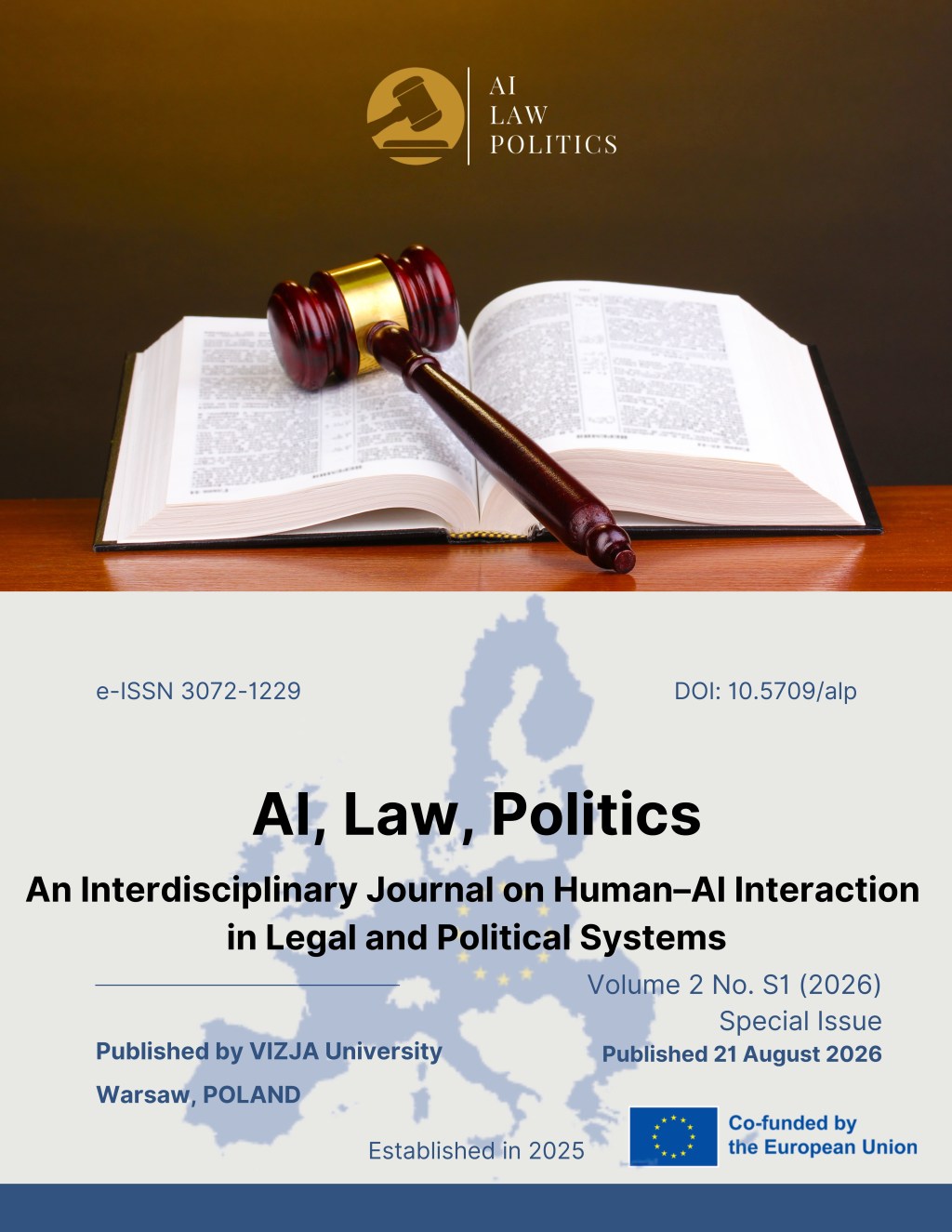
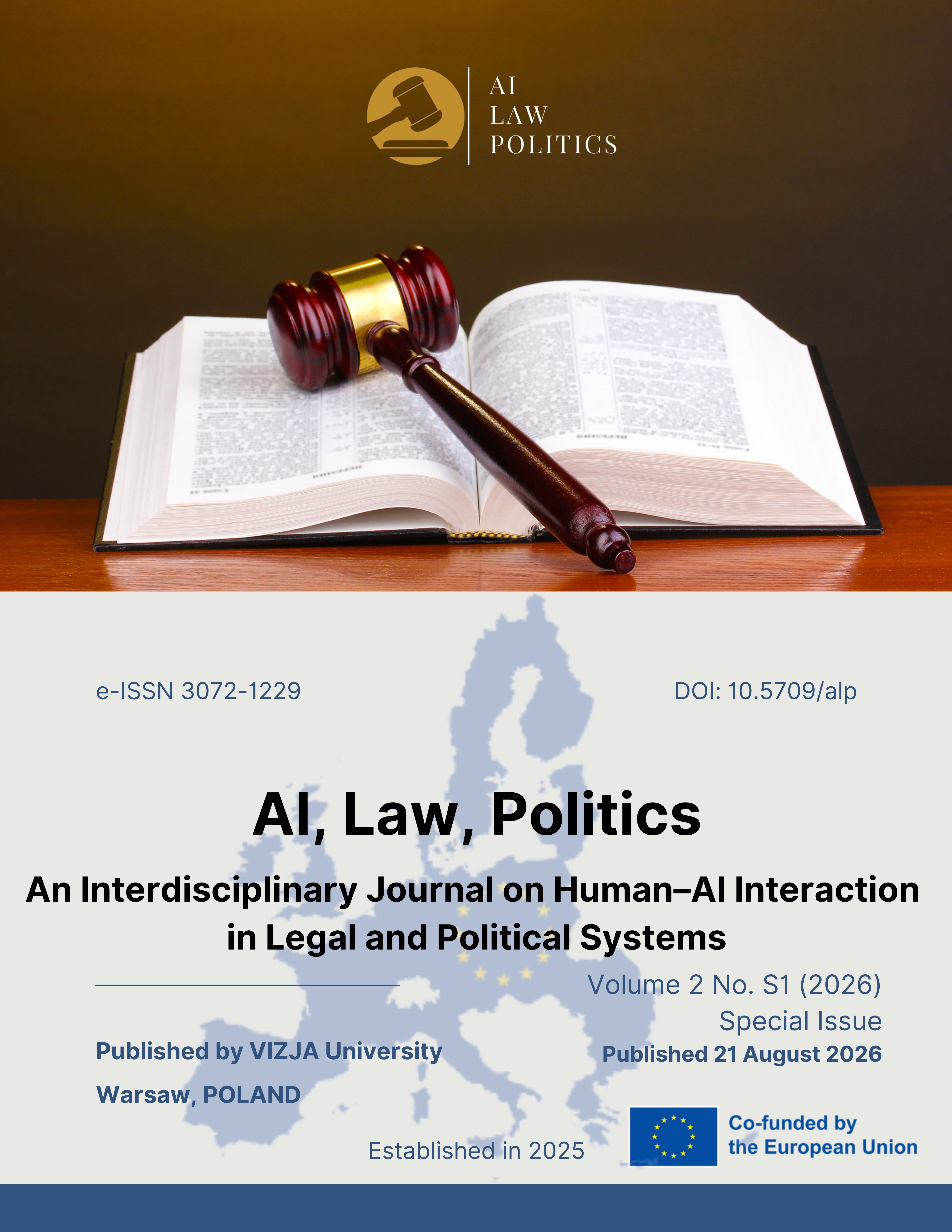
ROAD2EU is pleased to announce the publication of the peer-reviewed Special Issue Digital European Studies and EU Synergy Policies in AI, Law, Politics, Vol. 2 No. S1 (2026).
From conference dialogue to peer-reviewed publication
The Special Issue develops scholarly dialogue associated with the first ROAD2EU International Scientific and Practical Conference, held online on 20–21 April 2026. It brings together research on Digital European Studies, EU policy integration, accountable university governance, responsible artificial intelligence, the twin transition, social inclusion and Poland–Ukraine academic cooperation.
Important distinction. The publication is an independently edited, peer-reviewed journal issue. It is not the proceedings of the ROAD2EU Conference.
Inside the Special Issue
The 178-page issue contains an editorial and eight DOI-linked scholarly contributions addressing:
- Europeanisation and digital competence in higher education;
- evidence governance and defensible impact claims in Jean Monnet actions;
- responsible AI, fundamental rights and institutional accountability;
- the digital and green twin transition in university decision-making;
- social inclusion, entrepreneurship and Poland–Ukraine academic cooperation.
ROAD2EU project-team contributions
Yan Kapranov, ROAD2EU Project Coordinator and Guest Editor, contributed the editorial and a research article on evidence governance in a Jean Monnet Module. Olena Pimenowa contributed a conceptual article on translating the twin transition into accountable decisions in Polish higher education.
This publication is associated with scholarly dialogue developed within ROAD2EU — Roadmap for Integrating EU Policies and Strategies on Economic, Social, and Territorial Synergy in Polish Higher Education through Digital European Studies (Grant Agreement No. 101235886 — ROAD2EU — ERASMUS-JMO-2025-HEI-TCH-RSCH), co-funded by the European Union.
Views and opinions expressed are, however, those of the authors only and do not necessarily reflect those of the European Union or the European Education and Culture Executive Agency. Neither the European Union nor the granting authority can be held responsible for them.